
What Counts as Evidence
The Caves of SteelThe case’s progress depends on distinguishing observed facts from interpretations, until a handful of physical details overturn confident but false explanations.
increasing Bearing strength in each event
 decreasing
Bearing strength in each eventdecreasingA Corpse Not Examined
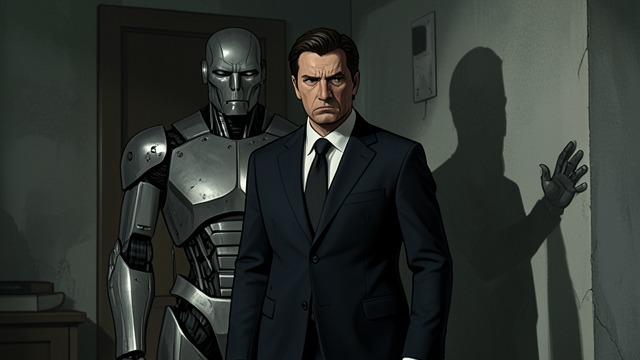
A Corpse Not Examined
Evidence unavailable
The Spacers cremated Sarton’s body, leaving no remains for Baley to examine. Enderby’s identification of the corpse cannot be independently checked after the fact.
An investigative limitation
The missing body allows several theories to flourish, including the possibility of a robot substitute. Baley must depend on testimony and indirect evidence.
The case begins with a crucial object removed from scrutiny.
A Face in a Crowd

A Face in a Crowd
Machine certainty
Daneel identifies people who appeared both at the shoe store and in the kitchen. His memory is precise enough to guide the investigation, but his testimony may not be accepted by a court.
Accuracy is not proof
Baley distinguishes between knowing a face and being able to prove an accusation under legal standards. The case requires evidence that survives beyond the investigators’ certainty.
A reliable observation still has to enter a human system of proof.
A Weapon That Cannot Fire

A Weapon That Cannot Fire
Appearance conceals function
Baley believes Daneel’s blaster threat proves the robot could have violated the First Law. Inspection shows the weapon has neither a charge nor an ignition bud.
Evidence revises interpretation
The visible object was genuine in shape but not usable as a weapon. Baley must abandon an inference that seemed obvious when he lacked technical knowledge.
The case shows how material examination can overturn a persuasive narrative.
A Name Misremembered
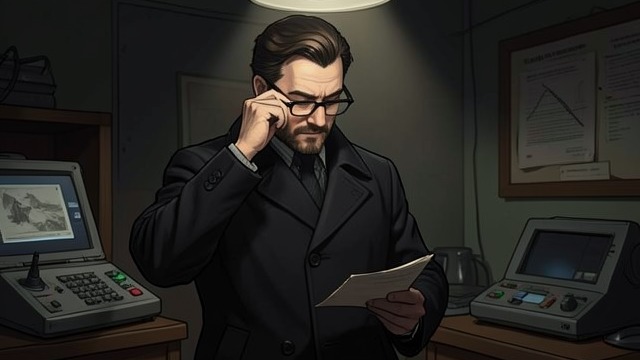
A Name Misremembered
A suspicious report
Enderby claims that Clousarr identified Jessie by her rarely used full name, Jezebel. Baley knows she had stopped using it years before joining the group.
A detail exposes fabrication
When pressed, Enderby revises his claim and admits he may have supplied the name himself. The discrepancy reveals that he may be inventing the connection to strengthen the case against Baley.
Memory becomes evidence of the accuser’s dishonesty.
Fragments Over Confession
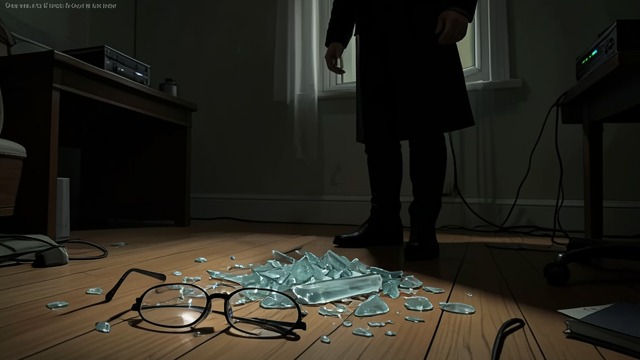
Fragments Over Confession
Physical trace found
Baley locates lens fragments in the scene image and connects them to Enderby’s glasses. This small trace corroborates his reconstruction of the murder.
A confession made credible
Enderby’s collapse and admission follow, but the physical fragments matter because they do not depend solely on his reaction. The case moves from inference toward an independently testable fact.
Careful attention turns overlooked debris into the strongest evidence.
At the first Spacetown briefing
During Daneel’s recognition of the watchers
During Gerrigel’s test of Daneel
During Enderby’s interrogation after Clousarr is detained
Moments before midnight
